
India’s Heatwave Crisis: Economic Impact & Business Challenges for Labor Protection
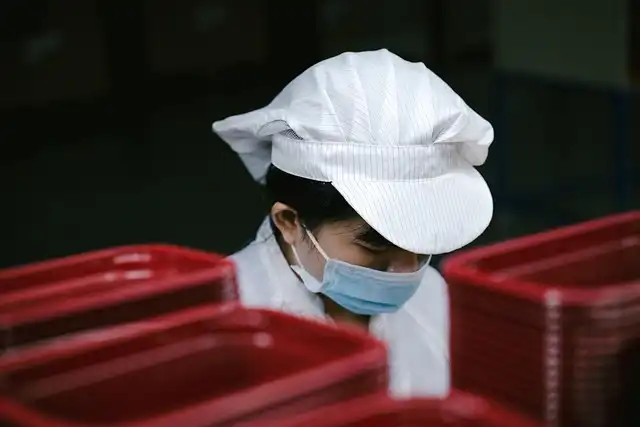
India faces up to 4.5% GDP loss by 2030 due to heatwaves impacting labor hours. MSMEs struggle with compliance, enforcement, and rising operational costs. Informal sectors lack basic protection, leading to severe worker health and productivity issues.
Economic Impact of Rising Heat
The Globe Bank has approximated that rising warmth and humidity could put up to 4.5 percent of India’s GDP in jeopardy by 2030 through loss of labour hours. The International Work Organisation (ILO) has also forecasted that by 2030, more than 2 per cent of total working hours around the world can be shed each year since it is as well warm to function.
Most of the times, warm reduction steps are not appropriately applied because there are too many employees for the exact same job and a lot of are migrants going to work at meagre salaries in severe conditions. Absence of understanding and weak enforcement are also contributing to inadequate execution.
On-Ground Challenges & Worker Realities
For lots of making units, cooling down plans have currently become part of day-to-day operations as opposed to optional upgrades. “At the system, we offer facilities such as fans, coolers, cool drinks, ORS and tidy alcohol consumption water for employees,” claimed the pulp moulding unit proprietor. “Labourers involved in mould drying are provided 15-20 min breaks after 1.5-2 hours of work.”
Consuming water also continues to be a significant concern. Amit said, “Maalik ki or se sirf ek paani ka vessel lagaya jata hai, aur usi paani ka istemal eent banane aur peene dono ke liye kiya jata hai (Just one water tanker is set up by the proprietor, and the exact same water is made use of for brick-making and alcohol consumption purposes).”.
“Brick kiln employees are among the worst affected during heatwaves. Throughout several kilns in India, there are practically no warmth defense procedures in place despite severe temperature levels,” stated Nirmal Gorana, convenor of the National Campaign Committee for Obliteration of Adhered Work (NCCEBL).
MSMEs: Hidden Operating Costs
For MSMEs and labour-intensive systems, the challenge ahead is mosting likely to be harder. Without inexpensive finance, more clear advice and stronger enforcement, the cost of adapting to extreme heat may continue to drop hardest on employees the very least secured from it.
For manufacturers like him, extreme warm is no more simply a seasonal trouble or an employee welfare concern. It is progressively emerging as a concealed operating cost through lower employee effectiveness, greater cooling costs and increasing electrical energy usage.
Addressing the Adaptation Gap
Chitale added that shared infrastructure and pooled resources could aid link the adjustment gap: “Pooling resources for very early caution systems and cooling down framework allows smaller sized companies to gain access to interventions they could not afford individually.”.
“Federal government heatwave advisories are not being evenly carried out throughout markets. While large devices demonstrate high conformity, serious voids stay in labour-intensive and unorganised industries,” stated Anay Gupta, president of the All India Rubber Industries Association.
One reason that bigger units may be a lot more willing to comply with standards is that they have the required capital, but additionally due to the fact that they have large customers that need them to implement labour defense measures.
According to World Resources Institute (WRI) India, employers additionally need more clear information on just how warm influences performance and the economic benefits of low-cost interventions. The organisation has actually suggested that financial bodies such as SIDBI might discover specialized loan products for heat-resilient upgrades.
Formal vs. Informal Sector Disparity
Employees near heat-intensive makers are also provided extra support. “Staff members working near hot press devices are given protective attires and devoted followers to cope with shopfloor temperatures. Employees are permitted extra short breaks if required, in addition to the regular one-hour lunch break. Rest rooms and staff quarters are also readily available inside the properties,” he included.
Beyond power expenses, makers indicate a clear performance impact. Heat-related fatigue and dehydration lead to more breaks, slower job cycles and reduced working hours, affecting general output and send off timelines.
However, this stands in comparison to informal systems where there are no safeguards or procedures. According to Gorana, workers typically lack also the most standard security facilities and work protections continue to be weak.
Quantifying India’s Heat-Related Losses
This additionally postures threats to the nation’s GDP. According to Dr Vishwas Chitale, other at the Council on Energy, Setting and Water (CEEW), India lost an approximated $159 billion in work capacity as a result of extreme heat in 2021, comparable to 5.4 percent of GDP. “Looking in advance, researches recommend heat tension might decrease India’s GDP by virtually 4.5 percent by 2030,” Chitale claimed.
According to a report in The Times of India, micro, average and little enterprises (MSMEs) in Madhya Pradesh lately estimated efficiency losses of almost 20 per cent as a result of extreme heat, with workers reporting fatigue and repeating health issues.
Shopfloor Conditions & Operational Expenses
The presses vapor, dryers operate, and slurry makers churn under tin roofing that traps warmth inside the shopfloor. On such days, workers stop briefly every hour for water, briefly action right into shaded edges, and return to function.
Bhatia said functional costs climb greatly in summer. “There is greater expenditure on motor upkeep, electrical power bills, air conditioning unit, coolers and fridges throughout the warmer months,” he stated.
Producers say medical preparedness and water accessibility have actually also come to be essential during peak summer. “A medicine box and dispensary room are constantly readily available at the system. Water tankers are prepared to ensure uninterrupted supply,” claimed Prateek Bhatia, supervisor at Krishnanchal Pulp & Documents Private Limited, a paper mill system in Uttar Pradesh.
Enforcement Gaps & Future Outlook
The divide between formal and casual industries ends up being sharper throughout heatwaves. While laws such as the Occupational Security, Health and Working Issue Code (OSHWC), 2020 and federal government advisories recommend warm precaution, implementation remains uneven.
On such days, employees pause every hour for water, briefly step right into shaded corners, and return to work. “At the device, we offer facilities such as fans, colders, cold drinks, ORS and clean alcohol consumption water for workers,” stated the pulp moulding device proprietor. Workers near heat-intensive equipments are also offered additional assistance. According to Dr Vishwas Chitale, other at the Council on Energy, Atmosphere and Water (CEEW), India shed an approximated $159 billion in labour capacity due to severe warm in 2021, comparable to 5.4 per cent of GDP. “Looking in advance, researches suggest warm tension might reduce India’s GDP by virtually 4.5 per cent by 2030,” Chitale claimed.
1 Climate adaptation2 economic impact
3 Heatwaves India
4 Labor productivity
5 MSME challenges
6 Worker protection
« Kevin Warsh Confirmed as New Federal Reserve Chair Amid Inflation FearsIndia’s Organic Waste: $51B Market, 26 Lakh Jobs & Emission Cut by 2047 »